Complete Breakdown: iPhone 17E Versus the Entire iPhone 17 Series
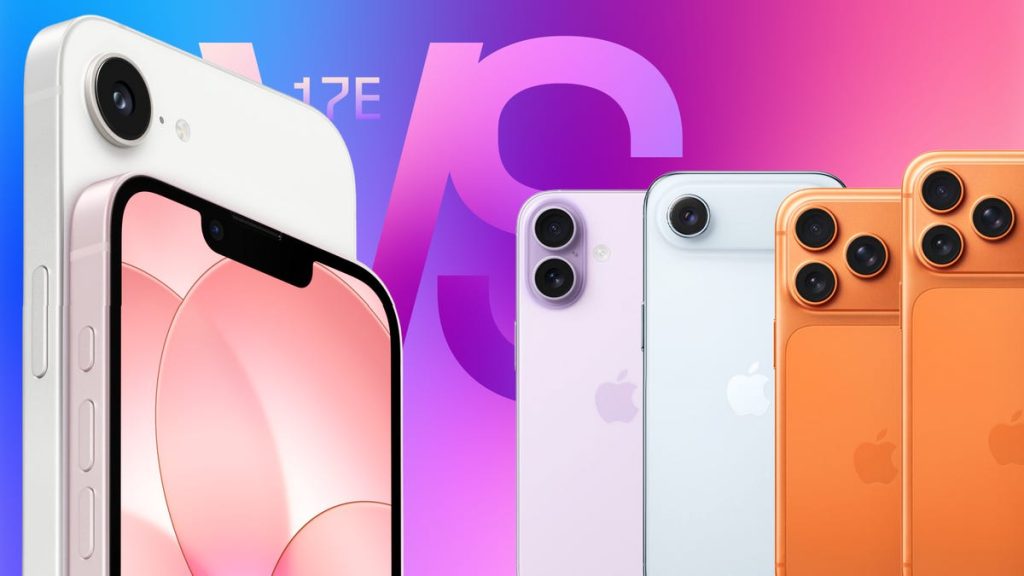
Apple has introduced the budget-friendly iPhone 17E as the most affordable option in its newest smartphone collection, maintaining the $599 price point established by its predecessor, the iPhone 16E. This entry-level device brings several meaningful improvements, including expanded 256GB base storage, MagSafe support, and the enhanced A19 processor.
Despite these upgrades, the iPhone 17E remains positioned as a more basic alternative compared to the Air model and premium variants in the iPhone 17 family. Notable limitations include a single camera system, absence of the Dynamic Island interface, and no Camera Control button. Additionally, while it features a 12-megapixel front camera, it omits the Center Stage functionality that automatically adjusts between portrait and landscape modes, which is standard across other iPhone 17 models.
Screen Size and Build Quality
The iPhone 17E features a 6.1-inch OLED screen, making it the most compact option in the series. The standard iPhone 17 and 17 Pro both offer 6.3-inch displays, while the Air model provides a 6.5-inch screen. The Pro Max leads with the largest 6.9-inch OLED display.
A significant distinction lies in refresh rate capabilities. While the Air and other iPhone 17 variants support 120Hz variable refresh rates for smoother scrolling and always-on display functionality, the iPhone 17E is limited to 60Hz. Users upgrading from older models like the iPhone 16 may find this difference less noticeable.
The iPhone 17E lacks the Dynamic Island feature present throughout the rest of the lineup and doesn’t include the physical Camera Control button. However, it maintains premium build quality with an aluminum frame and Ceramic Shield 2 protection, matching other models except the titanium-framed Air. At 0.31 inches thick, it matches the standard iPhone 17’s profile while weighing 169 grams, just slightly heavier than the Air’s 165 grams.
Photography Capabilities
Camera systems vary significantly across the lineup. The iPhone 17E includes only one 48-megapixel rear camera with sensor cropping for 2x magnification, similar to the Air model’s single-camera setup. The standard iPhone 17 steps up with dual cameras: 48-megapixel wide and ultrawide lenses. The Pro and Pro Max models feature triple-camera systems with 48-megapixel wide, ultrawide, and telephoto lenses, offering 4x optical zoom expandable to 8x at 12 megapixels.
For selfies, the iPhone 17E provides a 12-megapixel front camera, while all other models in the series include upgraded 18-megapixel front-facing cameras. The entry-level model also lacks the Center Stage feature for automatic orientation switching.
Performance and Power Management
Storage options begin at 256GB for the iPhone 17E, doubling the previous generation’s base capacity and aligning with the rest of the series. All models offer 512GB variants, with only the Pro and Pro Max available in 1TB configurations.
The iPhone 17E runs on Apple’s A19 chip, identical to the standard iPhone 17 but with a four-core GPU compared to the latter’s five-core setup. The Air, Pro, and Pro Max models utilize the more powerful A19 Pro processor.
Battery performance varies across models, with the iPhone 17E maintaining the same 4,005-mAh capacity as its predecessor, providing approximately 26 hours of video playback. This actually exceeds the standard iPhone 17’s 3,692-mAh battery and the Air’s 3,149-mAh capacity. The Pro models lead with 4,252-mAh and 5,088-mAh batteries respectively. The A19 processor and C1X cellular modem help optimize power efficiency in the iPhone 17E.
The addition of MagSafe compatibility addresses a major omission from the previous generation, enabling magnetic charging and accessory support. The device supports up to 15 watts of Qi2 wireless charging, while other models in the lineup offer faster charging capabilities, reaching 50% capacity in 30 minutes with appropriate adapters.