NASA Unveils Real-Time Tracking Platform for Upcoming Artemis II Lunar Mission
After more than fifty years since humans last walked on the moon, space exploration is poised for a historic comeback. NASA’s ambitious Artemis program seeks to capture the same global fascination that once surrounded the legendary Apollo missions, marking humanity’s renewed commitment to lunar exploration.
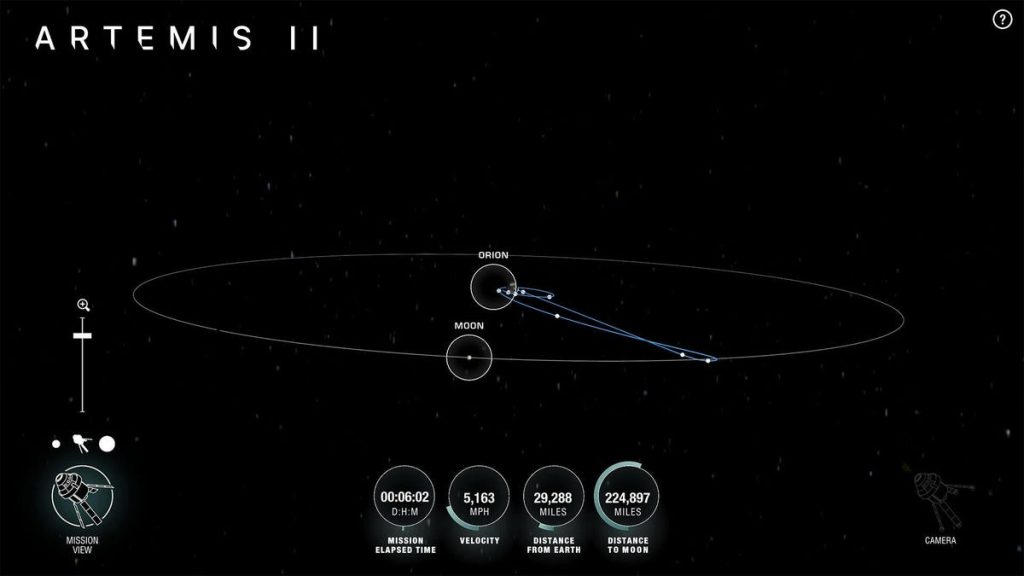
The Artemis II mission is set to launch during April’s opening week, representing the first crewed lunar journey since 1972. This milestone flight will demonstrate significant progress for NASA’s contemporary moon program. To enhance public engagement, the space agency has unveiled an innovative tracking system that allows real-time mission monitoring.
NASA’s Artemis initiative represents a comprehensive strategy to reestablish human presence on the moon while building sustainable infrastructure for extended exploration. The program specifically targets the lunar south pole region, focusing on developing advanced technologies for prolonged missions and positioning the moon as a launching point for eventual Mars expeditions.
The newly launched Artemis Real-time Orbit Website, known as AROW, is currently accessible to users worldwide, though limited activity is visible until the mission commences. The platform can also be accessed through NASA’s official mobile application for smartphone users. This digital tool provides public access to live data transmitted from Orion spacecraft sensors directly to Mission Control at Johnson Space Center in Houston.
The interface offers straightforward navigation with comprehensive mission visualization. Users can monitor the spacecraft’s velocity, Earth distance measurements, and proximity to the moon. Mobile application users receive additional features, including an augmented reality function that enables sky-pointing to locate Artemis II’s position relative to their terrestrial location. This technology mirrors functionality found in popular astronomical applications like Google Star Map and similar stargazing platforms.
NASA confirms that tracking capabilities will activate following Orion’s separation from the rocket’s upper stage, anticipated approximately three hours post-launch. The system will provide continuous real-time updates throughout the complete ten-day mission duration.
The space agency is also providing downloadable flight data for enthusiasts interested in developing custom content, including personal visualizations or tracking applications. This information encompasses various technical details, including state vectors that precisely define Orion’s location and movement patterns. NASA will utilize identical data for spacecraft analysis and enhancement planning for subsequent Artemis missions.
While a specific launch date remains unconfirmed, NASA targets no earlier than April 1 for mission commencement. The launch timeline has shifted from its initial February schedule due to technical complications involving hydrogen leakage and helium flow problems. The agency reports successful resolution of both mechanical issues.